Your heart is pounding. Your chest feels tight. You cannot catch your breath, and a wave of fear tells you something is badly wrong.
For many people in Austin, that moment ends with one question: do I need the ER? Emergency room care for anxiety and panic attacks is a real and reasonable choice, especially when you are not sure what is causing your symptoms.
This guide explains the signs that call for the ER, what happens during a visit, and where to find crisis help in Austin. It is written to help you decide fast, without shame.
Table of Contents
Can You Go to the ER for Anxiety or a Panic Attack?
Yes. You can go to the ER for anxiety or a panic attack, and you should if your symptoms are severe, new, or hard to tell apart from a heart problem.
Panic attack symptoms can copy serious health problems. Mayo Clinic notes they can resemble a heart attack, and says to get evaluated if you are unsure what is causing them.
That is the main job of emergency room care for anxiety. The team checks for dangerous causes first, then helps you settle and plan your next steps.
Anxiety is also very common. The National Institute of Mental Health says about a third of U.S. adolescents and adults experience an anxiety disorder at some point. Needing help is nothing to be embarrassed about.
What a Panic Attack Feels Like
Common Panic Attack Symptoms
Panic attacks hit fast. According to Mayo Clinic and NIMH, they can bring:
- A racing or pounding heartbeat
- Sweating, chills, or hot flashes
- Trembling or shaking
- Shortness of breath or a tight throat
- Chest pain or tightness
- Dizziness, weakness, or feeling faint
- Nausea or stomach cramps
- Numbness or tingling in the hands
- Feeling detached or unreal
- A strong fear of losing control, or of dying
How Long Panic Attacks Last
Symptoms usually peak within minutes, says Mayo Clinic. NIMH says attacks can last from a few minutes to an hour or longer, and you may feel drained afterward.
NIMH also says panic attacks are not life-threatening. The trouble is that the fear of another attack can cause ongoing anxiety.
A first attack, or one that feels different from past ones, still deserves a medical check.
Panic Attack, Anxiety Attack, or Heart Attack?
You may hear anxiety attack and panic attack used to mean the same thing. In the moment, the name matters less than one question: is something dangerous going on?
You cannot reliably tell a panic attack from a heart attack by how it feels. Chest pain, a racing heart, sweating, and shortness of breath show up in both.
Read our guide on the signs of a heart attack and learn about our cardiac emergency care if chest symptoms are part of what you feel.
7 Signs You Should Go to the ER for Anxiety or Panic Symptoms
These are the signs that call for emergency room care for anxiety or panic symptoms. Call 911 or go to the nearest ER if you notice any of them:
- Chest pain or pressure that is new, severe, or spreads to your arm, jaw, or back.
- Trouble breathing that does not ease when you sit still and slow down.
- Fainting, near fainting, or confusion.
- Your first panic attack, or one that feels different from past attacks.
- Symptoms that keep building or last far longer than usual for you.
- A heart condition, lung condition, or other health risk that makes you worry the cause is physical.
- Thoughts of harming yourself or someone else.
For sign number 7, call or text 988. If the danger is right now, call 911. More crisis resources are listed below.
When in doubt, go. It is far better to be checked and told it was panic than to wait out a heart problem.
Emergency Room Care for Anxiety: What Happens During a Visit
Quick Checks First
The first goal is to rule out a medical emergency. Depending on your symptoms, the team may check:
- Your heart rate, blood pressure, and oxygen level
- Your heart rhythm with an ECG
- Blood tests
- Chest imaging, if your symptoms call for it
Priority Emergency Center has onsite lab services and diagnostic imaging, so many of these checks can happen in one place.

Calming and Treating Symptoms
Once serious causes are ruled out, the team can help you settle. That may mean a quiet space, calm coaching on your breathing, and a clear explanation of what your body just went through.
In some cases, a doctor may use a short-acting medicine for relief. NIMH notes that fast-acting options can lead to tolerance and dependence, so they are usually used for short periods. Whether any medicine fits depends on your history and exam.
Follow-Up After the ER
An ER visit is for urgent answers. It is not long-term care.
NIMH suggests starting with a primary care provider, who can refer you to a psychologist, psychiatrist, or clinical social worker. Cognitive behavioral therapy, or CBT, is the most-studied treatment for panic disorder. Medicines such as SSRIs and SNRIs are also common.
Panic disorder is diagnosed when attacks keep coming and lead to at least a month of worry about future attacks, or changes in behavior to avoid them. One attack does not mean you have it.
Good sleep, exercise, and healthy eating help, but they do not replace treatment.
What to Do During a Panic Attack
If a doctor has already told you your heart is fine and the symptoms feel familiar, these steps can help while the attack passes:
- Sit down somewhere safe
- Breathe in slowly through your nose and out through your mouth
- Name a few things you can see, hear, and touch to ground yourself
- Remind yourself that attacks peak and then pass
- Ask someone you trust to stay with you
If anything feels different, or you are not sure, skip the self-care and get help. This is where emergency room care for anxiety earns its place.
How to Help Someone Having a Panic Attack
You do not need to fix it. You just need to stay steady.
- Stay calm and speak slowly
- Ask what would help right now
- Do not tell them to just calm down
- Stay with them until it passes
- Call 911 if they have chest pain, trouble breathing, fainting, or confusion
Mental Health Crisis Help in Austin
Panic and anxiety can sometimes sit next to a deeper crisis. These resources are free to reach and open around the clock:
- 988 Suicide & Crisis Lifeline: Call or text 988, or use the online chat at 988lifeline.org. It is free, confidential, and open 24/7.
- Integral Care crisis helpline: Call 512-472-HELP (4357). Press 1 for English, then 1 for mental health crisis support. The toll-free number is 844-398-8252.
- Walk-in mental health urgent care: Integral Care lists walk-in urgent care for mental health crises among its services.
- 911: For immediate danger or a medical emergency.
For ongoing support, you can also search findtreatment.gov, which NIMH points to for finding services.
ER, Urgent Care, or Your Doctor?
Go to the ER for any red flag above, or any time you cannot tell if it is panic or a medical problem.
If your symptoms are mild, familiar, and settling, call your primary care provider or a mental health professional. Our guide on ER vs urgent care in Austin can help you choose.
Not sure about the symptoms in front of you? Our guide on stomach ache or emergency shows the same kind of thinking for another common worry.
Frequently Asked Questions About Emergency Room Care for Anxiety
Can I go to the ER for a panic attack?
Yes. Go if your symptoms are severe, new, or could be a heart problem. The team can check for medical causes and help you settle.
Can the ER tell if it is anxiety or a heart attack?
The ER can run tests, such as an ECG and blood work, to look for heart problems. Do not try to decide this at home, because the symptoms overlap.
How long does a panic attack last?
Symptoms usually peak within minutes. NIMH says attacks can last from a few minutes to an hour or longer.
Will I be judged for coming in with anxiety?
No. Panic symptoms are real physical symptoms, and they deserve care. You are never wasting anyone’s time by getting checked.
Does one panic attack mean I have panic disorder?
Not necessarily. NIMH says panic disorder involves repeated, unexpected attacks plus at least a month of worry about more attacks or changes in behavior to avoid them.
You Do Not Have to Wait It Out Alone
If your body is telling you something is wrong, listen to it. Emergency room care for anxiety exists so you can get answers fast and get back to feeling safe.
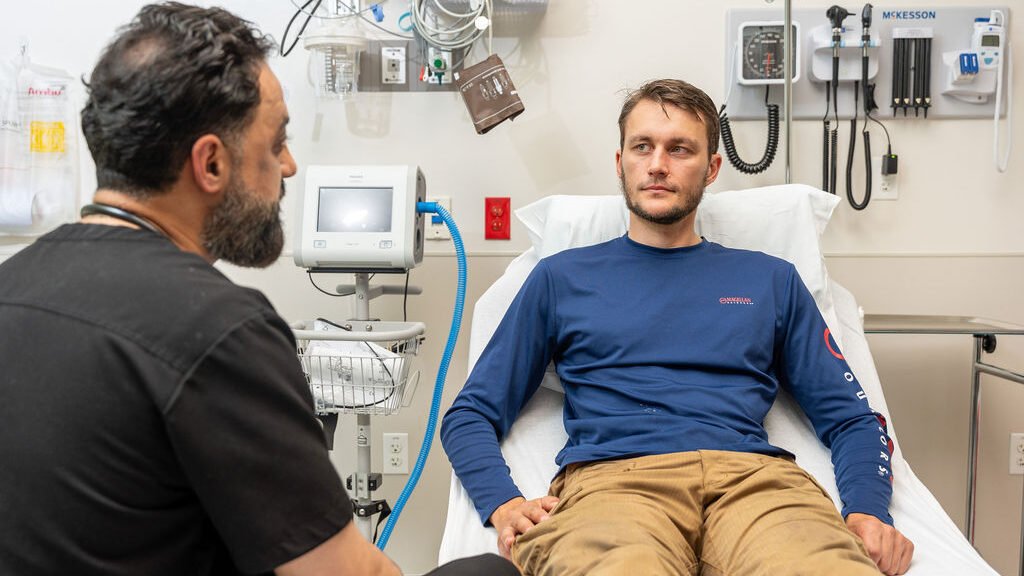
Priority Emergency Center is open 24/7 in Austin. You can use our walk-in ER at any hour and learn more about our emergency room services and 24/7 emergency and trauma care.
Find us on our location page or reach out through our contact page.
This article is for general education and is not a substitute for medical advice. In an emergency, call 911. If you are thinking about suicide, call or text 988.