Nobody plans to spend hours in an emergency room waiting area. Yet ER wait times in Austin are one of the biggest worries people have when something goes wrong. The good news is that waits are not random, and there are real ways to get full emergency care without a long hospital wait.
This guide explains why ER waits happen, what the data says, how our ER is set up, what we cannot promise, and how to shorten your own visit.
Table of Contents
Quick Answer: Why Do ER Wait Times Vary?
ER wait times in Austin depend on triage, patient volume, and how fast tests come back. The sickest patients are always seen first. Priority Emergency Center has ER physicians, an onsite lab, and imaging under one roof, which means fewer handoffs. We cannot promise a set wait time, but we are built to move quickly.

Why ER Wait Times in Austin Vary So Much
An ER is not first come, first served. Texas Health Resources explains that patients are evaluated in order of severity of illness and risk, not by the order they arrive.
It lists these reasons a wait can grow:
- Severity: Less urgent patients wait while critical patients are treated first.
- Patient volume: The ER is one of the busiest areas of any hospital.
- Time of day and season: Waits often run long in late afternoons and during busy flu season.
- Diagnostics: High volume can slow lab results and the reading of imaging.
- Staff workload: Busy periods mean shorter conversations and less frequent check-ins.
That last point explains why two people with the same symptoms can have very different visits.
What the Numbers Say About ER Waits
The CDC’s National Center for Health Statistics reported that the median wait to see a physician in U.S. ERs was 33 minutes in 2009, up from 27 minutes in 2003. About 5% of visits had waits of more than 3 hours. This is older national data, but it shows that long waits are a long-running problem.
Researchers at Rice University also studied Texas freestanding ERs using data from 2010 to 2016. They found that in the state’s four largest metro areas, including Austin, freestanding ERs did not reduce congestion or wait times at nearby hospital ERs.
The authors added that freestanding ERs do not work as a perfect substitute for hospital ERs. We agree. A different building will not speed up the hospital down the road. What matters is what happens inside the ER you choose.

Where the Time Goes in an ER Visit
Every ER visit follows the same steps, and ER wait times in Austin can build up at any of them.
| Step | What can slow it down | How a smaller ER can help |
|---|---|---|
| Triage | A nurse must check vital signs and symptoms first | Sickest patients are seen first everywhere |
| Seeing the doctor | A full waiting room | Often fewer patients ahead of you |
| Lab tests | Samples sent out or queued | An onsite lab processes samples in the building |
| Imaging | Transport and scheduling | CT, X-ray, and ultrasound are onsite |
| Results and decision | Waiting for results to reach the doctor | The same team reviews them |
Our onsite lab and diagnostic imaging are the two places where fewer handoffs help most.
Full ER Care Under One Roof at Priority Emergency Center
We are an ER, not an urgent care clinic. Here is what you can expect, with no appointment needed:
- Board-certified emergency physicians on site 24 hours a day, every day, including holidays (see our emergency room services)
- A full onsite laboratory
- CT, X-ray, and ultrasound
- Care for all ages, from infants to adults (see our children’s ER services)
- Most private and commercial insurance plans, plus transparent self-pay pricing (see our insurance page)
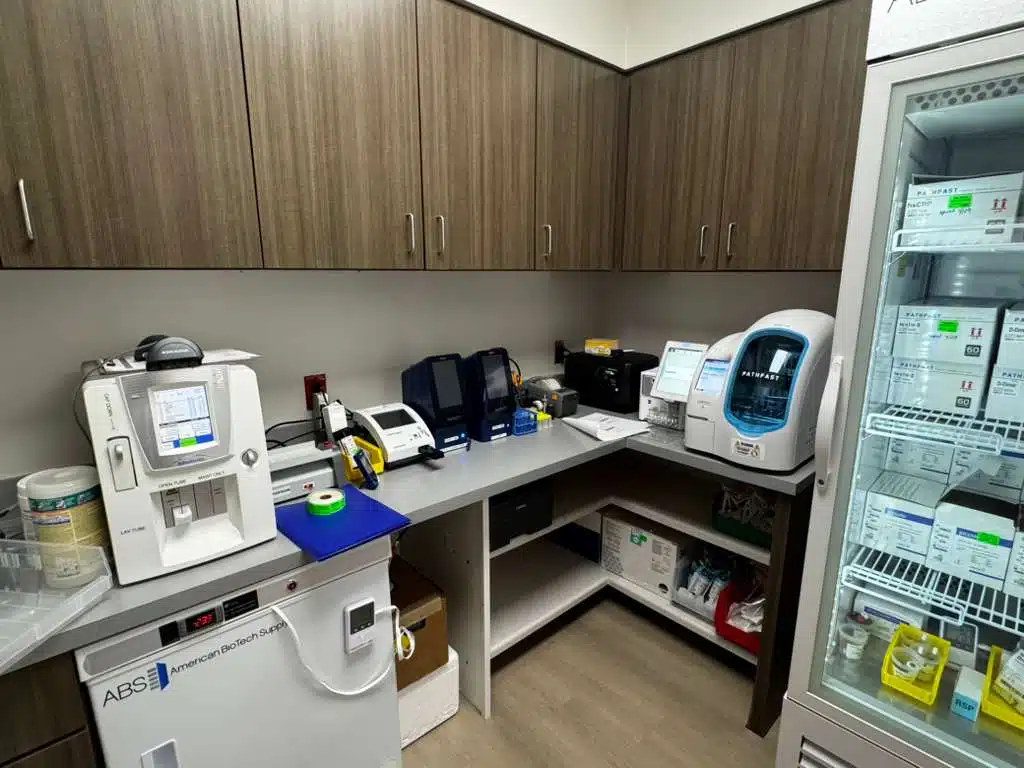
Imaging is on site as well, so you do not need to be sent across town for a scan.

What Patients Say About Our Wait Times
Reviews of our ER wait times in Austin are personal experiences, not guarantees. But they show what patients notice. One wrote on Google: “Quick and easy. Fantastic service! Doctor and staff went above and beyond.”
Another wrote that they love “the fact that you don’t have to wait long to be taken care of (unlike most other emergency rooms).”
Read more on our patient reviews page.
What We Cannot Promise
We would rather be honest with you about ER wait times in Austin than oversell.
- A set wait time. The sickest patients are always seen first, so your wait can change as people arrive.
- Hospital admission. If you need to stay in the hospital, we can help arrange a transfer.
- Government insurance. We do not accept government-issued plans. Call us before you come if you are unsure.
- Help for a heart attack or stroke. Call 911 first for these. Learn the signs of a heart attack.
Our guide to how a stand alone ER differs from a hospital ER covers these limits in more detail. You can also read our No Surprises Act page to understand your billing protections.
How to Shorten Your Own ER Wait
- Go early. Waiting until symptoms get worse can mean a sicker, longer visit.
- Bring a photo ID, your insurance card, a list of your medicines, and your allergies.
- Say your main symptom first, and when it started.
- Ask for an update. Texas Health Resources says it is always fine to ask staff how things are going.
- If you have no emergency symptoms, urgent care or your primary doctor may be quicker. See our guide to ER vs urgent care.
- Call 911 for chest pain, trouble breathing, or sudden weakness.

Frequently Asked Questions
How long are ER wait times in Austin?
There is no single answer for ER wait times in Austin. Waits depend on how sick you are and how busy the ER is. Ask the staff for an estimate when you arrive.
Why am I seen after people who arrived later?
Because ERs treat the most serious problems first. Texas Health Resources explains that patients are seen by severity, not arrival time.
Does a freestanding ER have shorter waits?
It can, but studies have not shown that freestanding ERs reduce waits at nearby hospitals in big Texas cities. Wait times depend on the ER you choose and your condition.
Do I need an appointment at Priority Emergency Center?
No. You can walk in any time, any day of the year.
Will I get a surprise bill?
Read our No Surprises Act page and call us at (737) 423-2300 with questions about your plan before or after your visit.
Get Help Any Time at Priority Emergency Center
If something feels wrong, do not sit through long ER wait times in Austin. Our team is open 24 hours a day, 7 days a week at 3563 Far West Blvd, Suite 110, Austin, TX 78731. See our location or call (737) 423-2300.
This article is for general information and is not medical advice. In an emergency, call 911 or come to the ER now.