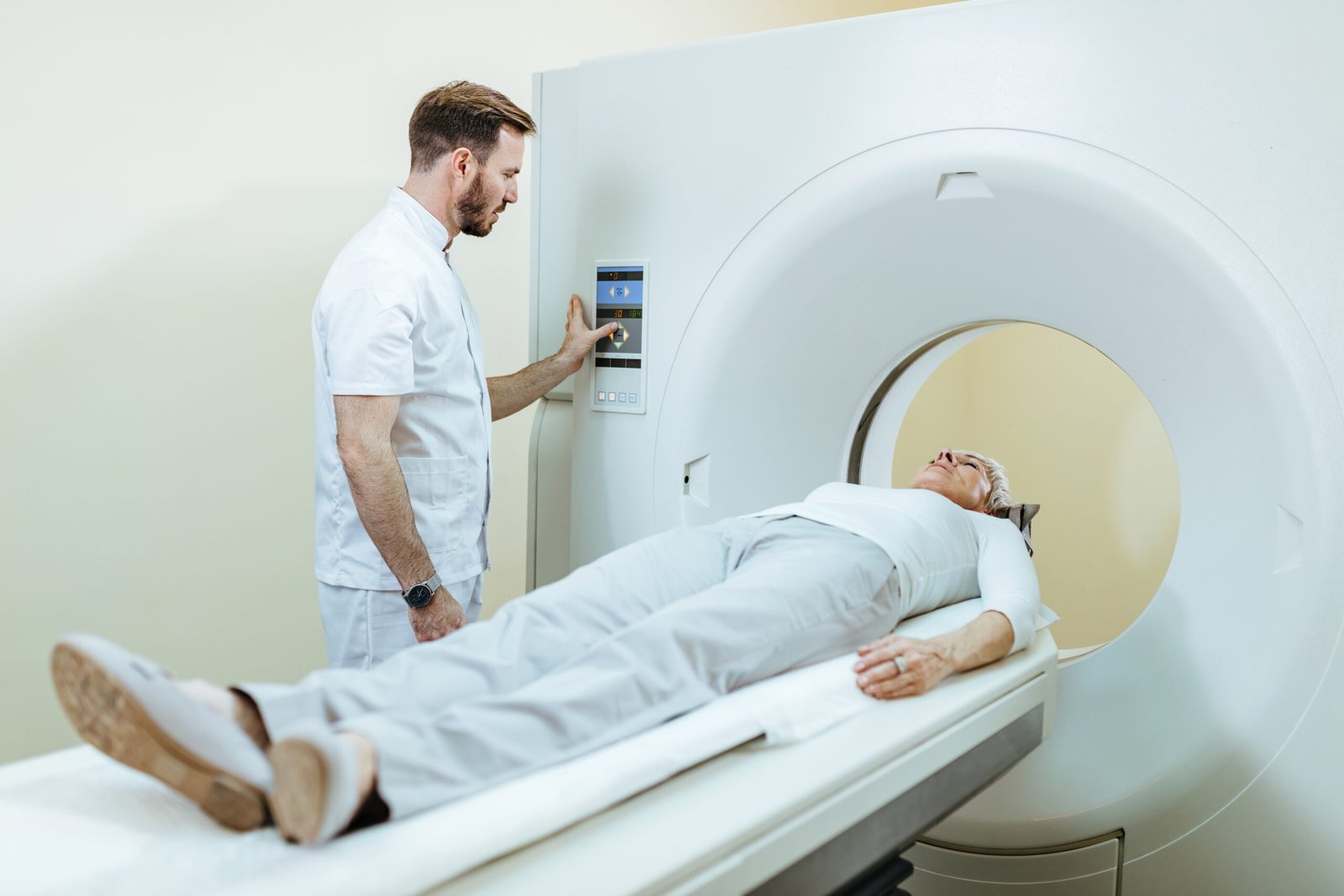
Will emergency room do MRI in a genuine medical crisis? The answer is yes, and understanding when and why that happens could be one of the most important things you ever learn about emergency care. Not every ER visit leads to an MRI, but when your symptoms point toward something serious inside the brain, spine, or nervous system, emergency diagnostic imaging becomes a central part of how physicians figure out what is wrong and how fast they need to act.
What Conditions Justify Emergency MRI in the ER
Certain emergencies demand more than a physical exam. When a patient arrives with acute stroke symptoms, including facial drooping, speech difficulty, sudden arm weakness, or confusion, every minute matters. Brain tissue survival depends on rapid, accurate information. A CT scan is usually the first step because it is fast and widely available, but MRI provides a level of detail that CT simply cannot match, particularly when ischemic stroke, intracranial hemorrhage, or brain hemorrhage needs to be confirmed or ruled out.
Spinal cord injuries present another clear category. If a patient comes in after trauma and shows signs of neurological decline, or if cauda equina syndrome is suspected because of bowel or bladder dysfunction alongside back pain, an urgent MRI evaluation becomes medically necessary. Waiting for an outpatient MRI scheduling appointment in these situations is not appropriate and, frankly, dangerous.
The thunderclap headache, sometimes described by patients as the worst headache ever, is a red flag that no board-certified emergency physician ignores. It can signal a subarachnoid hemorrhage, and the diagnostic workup in that case moves quickly. Focal neurological signs, sudden vision loss, unexplained altered mental status, and severe head trauma all fall into similar territory.
Disc herniation causing progressive neurological loss, vertebral compression fractures following high-impact trauma, and MRI perfusion studies needed to assess stroke territory are all scenarios where the ER may initiate or coordinate MRI access rather than discharge a patient and ask them to follow up later.

CT Scan vs. MRI: Why the ER Does Not Always Start With MRI
Most emergency departments perform on-site CT scanning as the first imaging step because CT is fast, available around the clock, and excellent for detecting bleeding, fractures, and acute pathology. The decision between CT scan vs. MRI in an emergency comes down to what clinical question the physician is trying to answer.
MRI is superior for visualizing soft tissue, spinal cord integrity, early ischemic changes in the brain, and differential diagnoses that CT cannot reliably distinguish. However, MRI takes longer, requires patient cooperation, and is not always available inside every facility at every hour. At a full-service emergency center with diagnostic imaging services on site, physicians can move through a coordinated imaging pathway based on what your presentation actually requires, rather than routing you through multiple facilities.
Radiologist interpretation is part of that equation. Getting stat imaging done is only half the value. The results need to be read accurately and quickly so the clinical team can act on them. Emergency MRI protocol at well-equipped facilities includes that interpretation piece as a built-in expectation, not an afterthought.
How Emergency Physicians Make the Decision
Physician evaluation drives every imaging decision. You will not walk into an ER and simply request an MRI. The process begins with your history, your symptoms, and a thorough neurological screening assessment. Board-certified emergency physicians are trained to recognize the clinical patterns that call for urgent imaging versus those that can be safely managed with observation or simpler testing.
The MRI medical urgency triage scale is a real framework that helps providers determine which patients need imaging immediately, which can wait briefly, and which can be discharged with outpatient follow-up. If your presentation crosses a threshold, medical necessity is established, and the imaging happens.
Neurovascular assessment, a review of how your brain and its blood supply are functioning, often happens in parallel with or immediately after imaging. Specialist consultation coordination may follow if findings require a neurosurgeon, neurologist, or spine specialist.
At Priority Emergency Center, patients have access to emergency room services with zero wait times and the full scope of diagnostic resources needed to manage complex presentations. That means imaging, labs, and physician evaluation happening together, not scattered across different appointments over multiple days.
What About Insurance Coverage for Emergency MRI
One concern that comes up for many patients is cost. Insurance coverage for emergency MRI is generally supported when medical necessity is documented, and most major insurers follow the prudent layperson standard. This means that if a reasonable person in your situation would have believed they were having a medical emergency, your coverage should apply regardless of whether the final diagnosis turns out to be serious or not.
The documentation your emergency team creates during your visit, including the clinical reasoning behind ordering the MRI, forms the foundation for the insurance justification. This is another reason why being seen by experienced, board-certified physicians matters. Proper documentation protects you.
Emergency Care in Austin, TX
Patients across Austin, TX often face a real gap between what they need and what a standard urgent care or imaging center can provide. ER vs. imaging center is not just a question of equipment. It is a question of clinical oversight, hospital admission capabilities when needed, and the ability to escalate care if something serious is found.
An imaging center can run your scan. An emergency center can run your scan, interpret the results in real time, initiate treatment, coordinate specialist consultation, and manage you through what comes next.
The onsite lab services available alongside emergency imaging at Priority Emergency Center mean that bloodwork supporting neurological or trauma evaluations happens simultaneously with your imaging, cutting the time between arrival and a clear clinical picture.
24/7 emergency services matter precisely because strokes, spinal emergencies, and thunderclap headaches do not wait for business hours. Austin deserves access to emergency care that can actually handle these presentations without unnecessary delays.
Can I go to the ER just to get an MRI?
You can, but the ER will only order an MRI if your symptoms medically justify it. They do not run imaging on request.
Does the ER do MRI without insurance?
Yes. Emergency care cannot be denied based on insurance status. Billing is handled after treatment.
How long does an emergency MRI take in the ER?
The scan itself takes 30 to 60 minutes, depending on the body part. Total time, including evaluation, varies.
Will the ER do an MRI for back pain?
Only if you show serious neurological signs like leg weakness, numbness, or loss of bladder or bowel control. Routine back pain alone typically does not qualify.
Do I need a referral for an emergency MRI?
No. In an emergency setting the ER physician orders imaging directly based on your evaluation.
What is the difference between an ER MRI and a scheduled MRI?
An ER MRI is ordered urgently based on acute symptoms and read immediately. A scheduled MRI is planned in advance and results come later through your doctor.


